Mindset Mastery: A Practical Path to Reducing Stress, Anxiety, and Negativity
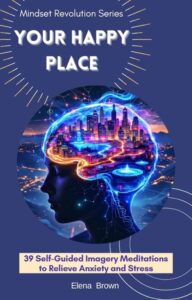
In today’s fast-paced world, stress, anxiety, and negativity often feel inevitable. However, mindset mastery—the intentional cultivation of positive, resilient thought patterns—offers a practical and empowering solution. By shifting our perception and response to challenges, we can transform our emotional well-being and create a happier, more fulfilling life.  Stress and anxiety often stem from how we interpret events, not the events themselves. Mindset mastery teaches us to reframe negative thoughts into constructive ones. For example, viewing a setback as a learning opportunity rather than a failure can reduce emotional distress and foster growth. This cognitive reframing, rooted in cognitive-behavioral techniques, helps break the cycle of rumination and self-doubt, replacing it with problem-solving and optimism.
Buy on Amazon
Buy Now PDF
The Power of Imagery Meditation: Calm Your Mind, Uplift Your Spirit.
Imagery meditation—where you consciously visualise peaceful scenes, positive outcomes, or healing experiences—is a simple yet powerful tool for reducing stress and enhancing well-being. By engaging your senses in a mental escape (like a serene beach, a lush forest, or a warm, safe space), you can: Lower Stress & Anxiety: Guided visualisations slow your heart rate, relax your muscles, and quiet a busy mind, helping you release tension naturally. Boost Mood & Positivity: Imagining joyful or successful moments rewires your brain to focus on possibility and gratitude, lifting your emotional state. Improve Focus & Clarity: Regular practice strengthens your ability to concentrate, making it easier to stay present and centred in daily life. Enhance Creativity & Problem-Solving: Visualising goals or solutions primes your mind to find real-world answers and inspiration.
Buy on Amazon
Buy on Amazon
Free Download

how coloring activities contribute to relaxation

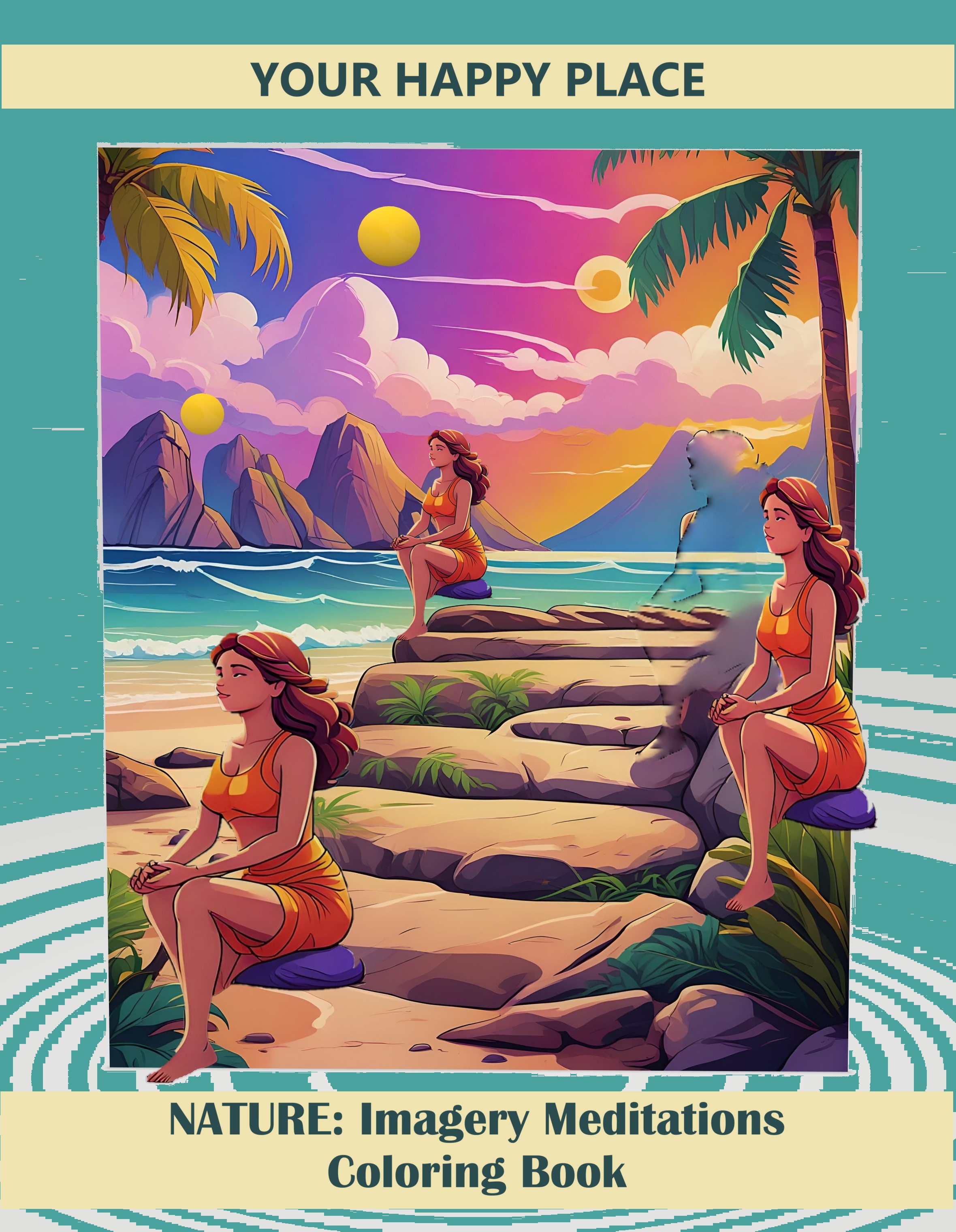
Coloring activities help relaxation by engaging the brain in a way that gently shifts attention away from stress, worry, and mental overload. Research in psychology and neuroscience suggests several reasons why coloring can calm the mind and body. Coloring activities help relaxation by engaging the brain in a way that gently shifts attention away from stress, worry, and mental overload. Research in psychology and neuroscience suggests several reasons why coloring can calm the mind and body.

1. The brain responds to imagined environments almost like real ones.  When people look at or imagine calming natural places, many of the same neural pathways activate as if they were physically there. This is connected to visualization and mental imagery processes in the brain. 

2. Nature imagery naturally lowers mental stress.  Psychological research on nature exposure shows that natural environments help reduce cognitive fatigue and emotional stress. Even viewing images of nature can have calming effects.

3. Happy-place imagery creates emotional escape.  Coloring calming scenes gives the mind a temporary “mental vacation” from pressure, worries, and overstimulation. During coloring, attention moves away from: deadlines, overthinking, emotional tension, future worries, and toward a peaceful imagined environment. This gentle psychological escape can reduce mental overload and create emotional breathing space.

4. Coloring strengthens positive visualization.  Visualization is widely used in relaxation, meditation, sports psychology, and stress reduction because the brain responds strongly to emotionally meaningful imagery. As someone colors a peaceful scene, they often begin mentally entering the environment: imagining the ocean breeze, hearing birds or waves, feeling warmth from sunlight, sensing stillness and safety. This multisensory mental engagement increases the calming effect.

5. Certain patterns may enhance calm. Complex but repetitive designs — especially mandalas, geometric forms, and nature-inspired patterns — may promote relaxation because the brain naturally responds well to symmetry, repetition, and predictable visual organization.

6. It creates a sense of completion and control.  Finishing even a small section of a page provides a subtle dopamine reward — a sense of progress and accomplishment. During stressful periods, simple achievable tasks can help restore emotional balance and a feeling of control.

7. Coloring supports emotional processing.  Colors themselves can influence mood and emotional expression. Many people intuitively choose colors that reflect or shift their emotional state. Coloring can therefore become a gentle, nonverbal way to process emotions without needing to analyze them intellectually.

Cover practguide
Buy Now PDF
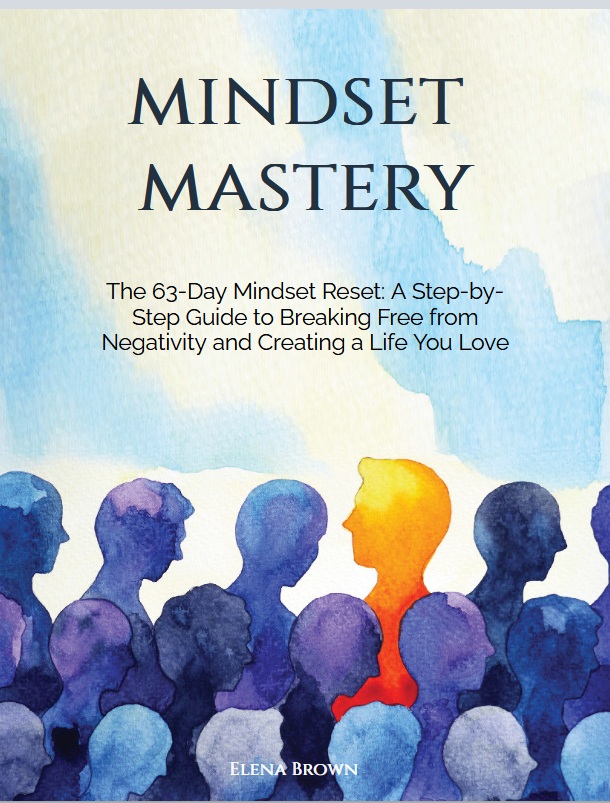
A self-help guide, "The 63-Day Mindset Reset," outlines a step-by-step system for transforming a negative mindset into a positive one. This system, called the Mind Mastery method, is structured around three 21-day phases that focus on monitoring negative thoughts, labelling them, and consciously reducing their emotional intensity using the Hermetic principle of polarity. The source provides a science-backed rationale for the method, connecting ancient wisdom on emotional transmutation to modern concepts such as neuroplasticity, cognitive restructuring, and brain biochemistry (e.g., changes in the prefrontal cortex and neurotransmitters). Ultimately, the guide offers a practical, multi-step roadmap for rewiring the brain and subconscious mind to achieve greater resilience, success, and emotional well-being through consistent daily rituals and intentional emotional shifting.
negativity table
Free Download
Try This: Evaluate Your Mindset with the Negativity Awareness Template Take a week to observe and assess your mindset—are your thoughts and emotions leaning more toward the negative or the positive? Use the "Negativity Awareness Template" to track your patterns and gain clarity. How to Do It: 1. Pause & Reflect: Throughout the day, notice your thoughts—especially in challenging moments. 2. Rate Your Mindset: On a scale of 1–10 (1 = highly positive, 10 = highly negative), score your dominant mindset for each situation. 3. Journal Your Findings: fill in each field in the template. 4. Review After 7 Days: Look for results—what drains your energy? This simple exercise can reveal where your mind defaults and help you consciously take the next step toward a more balanced, empowering perspective.